SDVOSB Certified
Friendswood, TX
Industry

Pressure Reduction for Water Wells

Groundwater and well pumping systems can involve sustained flow, changing discharge conditions, and localized pressure reduction. When pressure falls below vapor pressure near a restriction or outlet, cavitation can contribute to noise, vibration, and accelerated wear.
Submit System Data
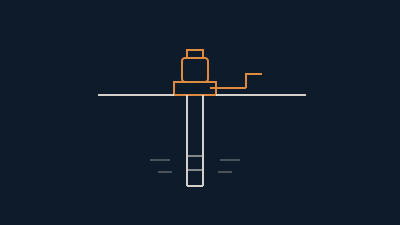
Line illustration of a wellhead and pump representing groundwater pumping systems.
Device
Anti-Cavitate Orifice Plate™
Code support
ASME B31.1 & B31.3
Materials
304L to super duplex & nickel alloys
Federal contracting
SDVOSB-Certified
Application detail

Cavitation control in groundwater pumping systems

Water well and groundwater pumping systems can experience cavitation when flow velocity, discharge conditions, and pressure reduction create localized low-pressure zones. These issues may appear near pump discharge piping, control valves, restriction points, or discharge outlets.

Key considerations

  • Sustained operation. Well systems may run for long periods, making small cavitation issues more damaging over time.
  • Discharge pressure changes. Rapid transition into lower-pressure conditions can contribute to vapor formation and collapse.
  • Wear and vibration. Cavitation-related damage may show up as noise, vibration, pitting, or repeated component replacement.
  • Field conditions. Actual flow rate, pressure, pipe size, and water temperature should be used to evaluate risk.

Controlled pressure reduction can help support reliable water flow and reduce cavitation-related wear in suitable applications.

How the plate helps

One device, three effects

The Anti-Cavitate Orifice Plate™ helps manage flow, pressure drop, and cavitation behavior in a single fixed-geometry device.

01

Noise reduction

Controlling how flow and pressure are reduced can lower noise levels generated within the system.

02

Cavitation mitigation

Managing the pressure drop helps mitigate cavitation that can damage pipes and downstream equipment.

03

Flow control

The plate regulates flow rate to help the system operate within the intended design conditions.
Request an engineering review

Evaluate your system for cavitation

Provide flow rate, inlet pressure, desired outlet pressure, pipe size and schedule, and fluid type and temperature. Restrict Flow will review the submitted system data and follow up if additional information is needed.